
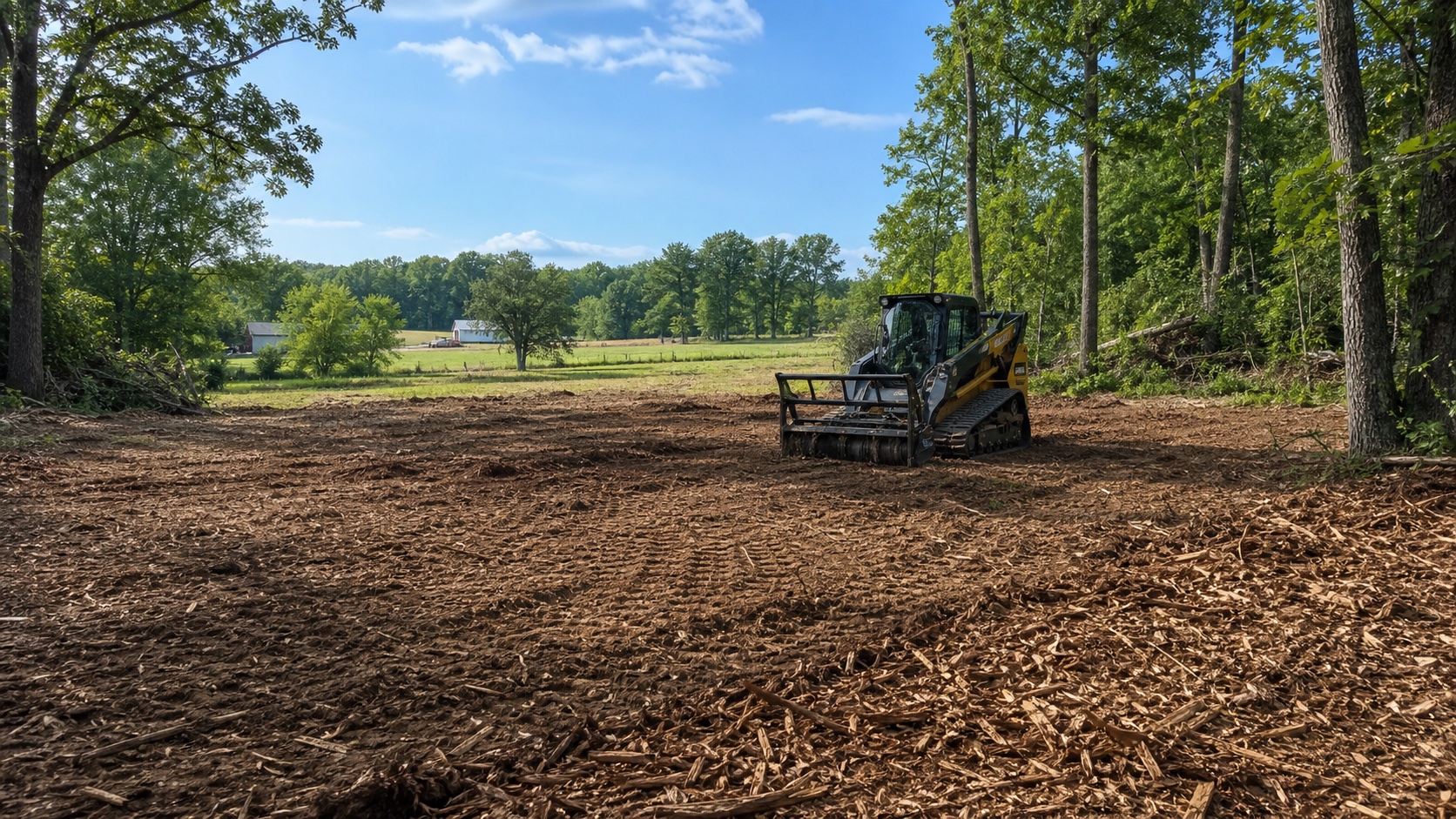
A pole barn project can get expensive fast if the site is not ready. The building package may be priced, the builder may have a date, and the drawings may look simple, but the land still has to support trucks, materials, drainage, and the actual building footprint.
That is where many Northeast Ohio projects lose time. The owner thinks they need a barn. The builder shows up and finds soft access, stumps in the pad area, standing water, no stone base, or not enough room to stage trusses and equipment. Good site prep prevents that mess.
The Right Order: Clear, Access, Drain, Pad
Pole barn prep is not just knocking down brush. The work should happen in the right order so one step does not create problems for the next crew.
| Step | What happens | Why it matters |
|---|---|---|
| 1. Layout | Mark the barn footprint, driveway, drainage path, and staging area | Prevents clearing the wrong area or boxing in equipment access |
| 2. Clearing | Remove brush, saplings, trees, and overgrowth from the work area | Creates visibility, access, and room for grading |
| 3. Stump and root work | Grind or remove stumps where the pad, driveway, or utilities will go | Stops settling and keeps roots out of structural areas |
| 4. Drainage planning | Identify where water enters, sits, and exits the site | Keeps the pad and driveway from turning soft after rain |
| 5. Driveway and access | Build or improve the route for trucks, stone, concrete, and crews | A barn crew cannot work efficiently if delivery trucks cannot reach the pad |
| 6. Pad preparation | Shape, compact, and stone the building area to builder specs | Gives the building crew a clean, stable starting point |
Start With the Footprint, Not the Chainsaw
Before clearing starts, decide where the building is actually going. That sounds obvious, but it is common for owners to point at a general area instead of marking the real footprint, door locations, driveway approach, and turn-around space.
For pole barns, the approach matters. A barn with a large overhead door needs enough straight access for trailers, equipment, campers, or hay wagons. If the driveway angle is too tight, the building can be technically finished but annoying to use forever.
What Usually Needs Cleared
- Brush and saplings around the proposed barn footprint
- Small trees and invasive growth that block equipment access
- Fence rows or field edges that have grown into the work zone
- A route for concrete trucks, stone deliveries, and building materials
- Extra staging space for trusses, posts, siding, and equipment
- Low branches or edge trees that interfere with trucks and lifts
On old farm ground, the problem is often not big timber. It is neglected field edge, multiflora rose, honeysuckle, grapevine, and saplings that have swallowed the usable area. Forestry mulching is usually the fastest way to open that kind of site.
Where Forestry Mulching Fits
Forestry mulching works well as the first pass on many pole barn sites because it clears brush and small trees in place. Instead of piling debris or hauling everything away, the material is processed into mulch on the ground.
But mulching is not the same as final pad prep. If posts, concrete, utilities, a driveway, or a finished stone base are going in, the footprint may still need stump removal, grading, compaction, and drainage work. Think of mulching as opening the site, not completing the build pad by itself.
Stumps Are the Part Owners Underestimate
Stumps do not matter much in a future wildlife trail or field edge. They matter a lot under a driveway, building pad, utility trench, or concrete area. Roots decay, voids form, and soft spots can show up later.
For a pole barn, stump grinding may be enough outside structural areas. Full stump removal may be needed where posts, trenching, stone base, concrete, or grade changes are planned. The right answer depends on location, depth, soil, and what the builder requires.
Drainage Is Not Optional in Northeast Ohio
Lorain, Huron, Erie, Medina, and surrounding counties all have sites where clay soil, flat ground, old farm lanes, and spring rain create soft access. A pad that looks fine in August can be a problem in March.
Before a barn goes up, the site needs a water plan. Where does roof water go? Does the driveway cross a ditch? Is a culvert needed? Will runoff move away from the doors, or will it sheet across the entrance and freeze in winter?
- Check where water naturally collects after rain
- Avoid placing the pad in the lowest convenient spot
- Plan roof runoff before stone and finish grading
- Use culverts where driveway access crosses a ditch or swale
- Keep positive drainage away from doors, posts, and concrete approaches
Driveway Access Can Make or Break the Build
Even a simple pole barn needs deliveries. Stone, posts, trusses, metal, concrete, lifts, and crew trucks all need a reliable path. A muddy two-track may work for a pickup, but that does not mean it will support loaded delivery trucks.
If the barn will be used for equipment, trailers, boats, livestock, or business storage, the driveway should be planned as part of the project, not as an afterthought. A cheap access route often becomes the most frustrating part of the property.
Typical Cost Drivers
| Cost factor | Why it changes the price |
|---|---|
| Tree and brush density | Thicker growth takes more machine time and may require multiple clearing methods |
| Stump count | Pad and driveway areas may need grinding or full removal, not just cutting flush |
| Driveway length | Longer access means more clearing, grading, fabric, stone, and drainage decisions |
| Soil moisture | Wet clay slows work and may require waiting, stone stabilization, or different equipment sequencing |
| Culverts and drainage | Ditch crossings, swales, and runoff control add material and machine time |
| Finish level | A rough cleared site costs less than a compacted stone-ready building pad |
Realistic Budget Ranges
Every site is different, but there are useful planning ranges. A small pole barn site on open ground with short access may only need light grading and stone prep. A wooded or brush-heavy site with a new driveway, stump work, drainage, and culvert work can be a much bigger project.
- Simple clearing around an open building area: often starts around a minimum service visit
- Brush-heavy access and footprint clearing: commonly several thousand dollars depending on size and density
- Wooded pad area with stump work: higher because clearing and root removal both matter
- Driveway and culvert work: priced separately based on length, materials, ditch conditions, and desired finish
- Full site prep package: clearing, access, drainage, and pad prep bundled into one planned scope
The cheapest quote is not always the lowest total cost. If a crew clears the brush but leaves the site soft, wet, stump-filled, or inaccessible for deliveries, the builder still has a problem and the owner still has to pay someone to fix it.
Best Time to Prep a Pole Barn Site in Ohio
Late winter, spring, and early summer are busy because owners want buildings started before summer and fall. The challenge is that spring ground can be wet, especially on flat clay or old farm ground.
If you want a barn built this year, start the site conversation early. Clearing can often happen before final building work, but grading, stone, and drainage need the right conditions. Waiting until the builder is ready can force rushed decisions.
What to Have Ready Before You Ask for a Quote
- Approximate barn size and orientation
- Desired door locations and driveway approach
- Whether concrete is planned now or later
- Photos or parcel map showing the proposed site
- Any known wet areas, ditches, tile outlets, or culverts
- Builder requirements for pad size, stone depth, and access
A site visit is still the best way to price the job honestly, but this information helps separate a real estimate from a vague guess.
Pole Barn Site Prep Across Northeast Ohio
Apex Land Services handles clearing, driveway access, drainage planning, stump work, and building site prep across Lorain, Huron, Erie, Medina, Ashland, Richland, Crawford, Wayne, Summit, Cuyahoga, Ottawa, and Seneca counties.
If you are planning a pole barn, shop, equipment building, horse barn, storage building, or rural garage, start with the site. A clean, dry, accessible pad makes the building project smoother from the first delivery to the final walkthrough.
Get a Site Prep Estimate
Call Ryan at (440) 839-8379 or use the instant estimate form to send the property details. Apex can help you figure out what needs cleared, what needs drained, where access should go, and what should be ready before the builder arrives.