
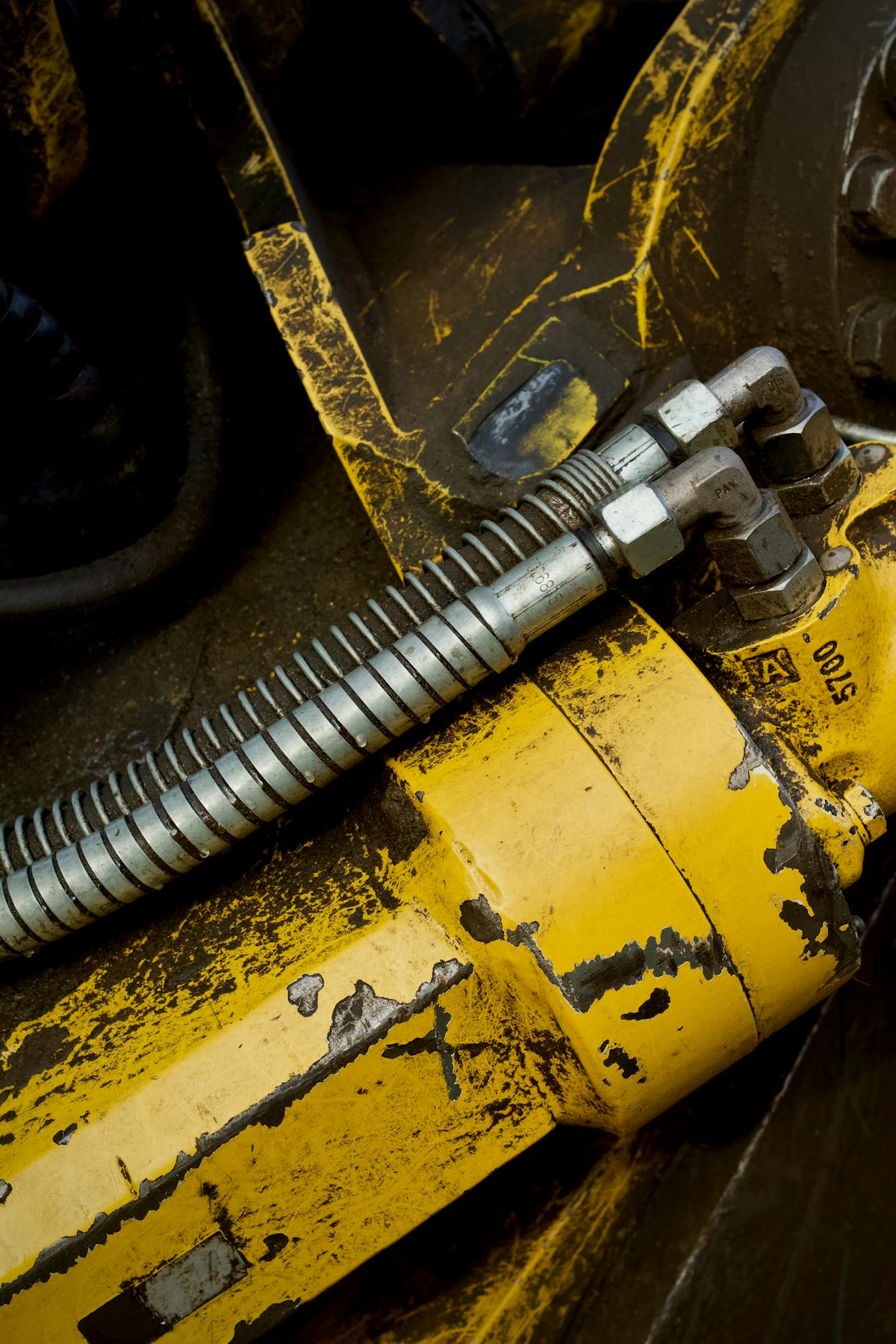
Here's something most property owners never think about: the condition of the teeth on a forestry mulcher directly affects how fast your land gets cleared, how clean the finish looks, and ultimately how much the project costs.
We think about it constantly. Every morning before a job, every fuel stop during the day, and every evening when we're loading equipment back on the trailer. Blade and tooth maintenance isn't glamorous, but it's the difference between a crew that clears an acre in four hours and one that takes eight.
Here's what goes into keeping land clearing equipment performing at its best — and why it matters for your project.
What's Actually Doing the Cutting
A forestry mulcher head is essentially a high-speed drum covered in carbide-tipped teeth. The drum spins at several thousand RPM, and those teeth grind everything in their path — brush, saplings, stumps, and small trees — into wood chips.
Each tooth is a wear item. They're designed to be replaced, and they wear down faster than most people realize. A single day of heavy mulching in hardwood brush can visibly dull a fresh set of teeth. In rocky ground, you might swap teeth multiple times in a single job.
Fixed Teeth vs. Rotating Teeth
There are two main styles of mulcher teeth, and each has different maintenance needs:
Fixed Teeth
- Bolted directly to the drum
- Cheaper to replace individually
- Wear on one side, so they need to be flipped or replaced more frequently
- Common on smaller mulcher heads
- Best for light to moderate brush clearing
Rotating Teeth (Swing Hammers)
- Mounted on pins and spin freely on impact
- Self-sharpening to some degree — the rotation distributes wear
- Last longer per tooth but cost more to replace
- Standard on heavy-duty commercial mulchers
- Better for mixed material — brush, stumps, and small trees together
We run rotating teeth for most jobs because the self-sharpening action keeps production rates consistent throughout the day. But we carry fixed teeth as backup for specific situations.
What Kills Teeth Fastest
Not all clearing is equal. Here's what wears equipment down, ranked from most to least destructive:
1. Rocks and Hidden Debris
This is the number one equipment killer. A fist-sized rock can shatter a carbide tip instantly. Old fence wire wraps around the drum and can damage bearings. Buried concrete from old foundations or demolition sites causes catastrophic tooth failure.
This is exactly why we do thorough site assessments before every project. Walking the property, checking satellite imagery for old structures, and asking the owner about anything that might be buried saves thousands in equipment damage.
2. Hardwood Species
Ohio is full of hard, dense wood — oak, hickory, black walnut, and ironwood are significantly harder on teeth than soft species like pine, poplar, or silver maple. A property dominated by mature oak will wear teeth 2-3x faster than one with mostly soft brush.
3. Dirt and Sand Contact
When the mulcher head contacts soil, the abrasive particles act like sandpaper on the carbide tips. Stumps are the worst because the teeth have to grind through the wood-soil interface at ground level. Keeping the drum just above grade extends tooth life significantly.
4. Frozen Ground
Winter clearing in Ohio means frozen soil, which is almost as hard as rock. We adjust our approach in winter — keeping the mulcher higher off the ground and avoiding stump grinding when temperatures are below freezing for extended periods.
Daily Maintenance Routine
Here's what a typical maintenance day looks like for our equipment:
Before Every Job
- Visual inspection of every tooth — looking for cracks, missing carbide tips, or excessive wear
- Check tooth torque — loose teeth vibrate and fail prematurely
- Inspect the drum for dents, cracks, or debris wrapped around the shaft
- Check hydraulic hoses and fittings for leaks
- Verify drive belt tension and condition
- Grease all fittings — mulcher bearings, pivot points, and track rollers
During the Job
- Monitor cutting performance — if production slows, it's usually teeth
- Listen for unusual sounds — rattling often means a loose or broken tooth
- Check for wire or cable wrapping around the drum at fuel stops
- Watch hydraulic temperature — overheating means something is binding
After Every Job
- Blow out debris from the mulcher housing and engine compartment
- Rotate or replace worn teeth
- Document hours and tooth condition for tracking replacement intervals
- Check and top off all fluids
- Clean tracks and undercarriage to prevent premature wear
Why This Matters for Your Project
You might wonder why any of this matters to you as a property owner hiring a land clearing crew. Here's why:
Production Speed
Sharp teeth cut faster. A crew with well-maintained equipment can clear an acre of moderate brush in 4-6 hours. The same crew with dull teeth might take 8-10 hours. Since most operators charge by the project (not hourly), the ones with sharp equipment can offer more competitive pricing because they're more efficient.
Finish Quality
Dull teeth tear and shred rather than cutting cleanly. The result is larger, rougher wood chips and a less uniform ground cover. Sharp teeth produce fine, even mulch that looks better and decomposes faster. If you're clearing for a lawn, garden, or building site, the finish quality matters.
Reliability
Equipment breakdowns mean delays. A broken tooth can halt work for 15-30 minutes. A damaged drum bearing can end the day. Preventive maintenance means your project stays on schedule.
The Hidden Cost of Cheap Equipment
Not every land clearing operator invests in maintenance the same way. Some run teeth until they're completely gone, skip daily greasing, and defer hydraulic service. The result is slower work, rougher results, and a higher chance of breakdowns on your property.
When you're comparing quotes, the cheapest price isn't always the best value. Ask what equipment the crew runs, how they maintain it, and how many hours are on their mulcher head. An operator who invests in maintenance delivers a better product — and usually finishes faster.
What We Run
At Apex Land Services, we run commercial-grade compact track loaders with professional forestry mulcher attachments. Our teeth are inspected before every job, and we carry a full set of spares on the trailer. We track hours on every component and replace wear items on a schedule — not when they fail.
It's not the most exciting part of what we do, but it's the foundation of everything else. When we show up on your property, the equipment is ready to perform. That means your project gets done on time, on budget, and with the quality finish you're paying for.
Ready to Get Your Property Cleared?
Whether you've got a few overgrown acres or a full building site to prep, we bring properly maintained professional equipment to every job. Get a free estimate online in under a minute — no phone tag, no waiting.
→ Get your free instant estimate at apxlandservices.com/instant-estimate or call us at (440) 839-8379.