
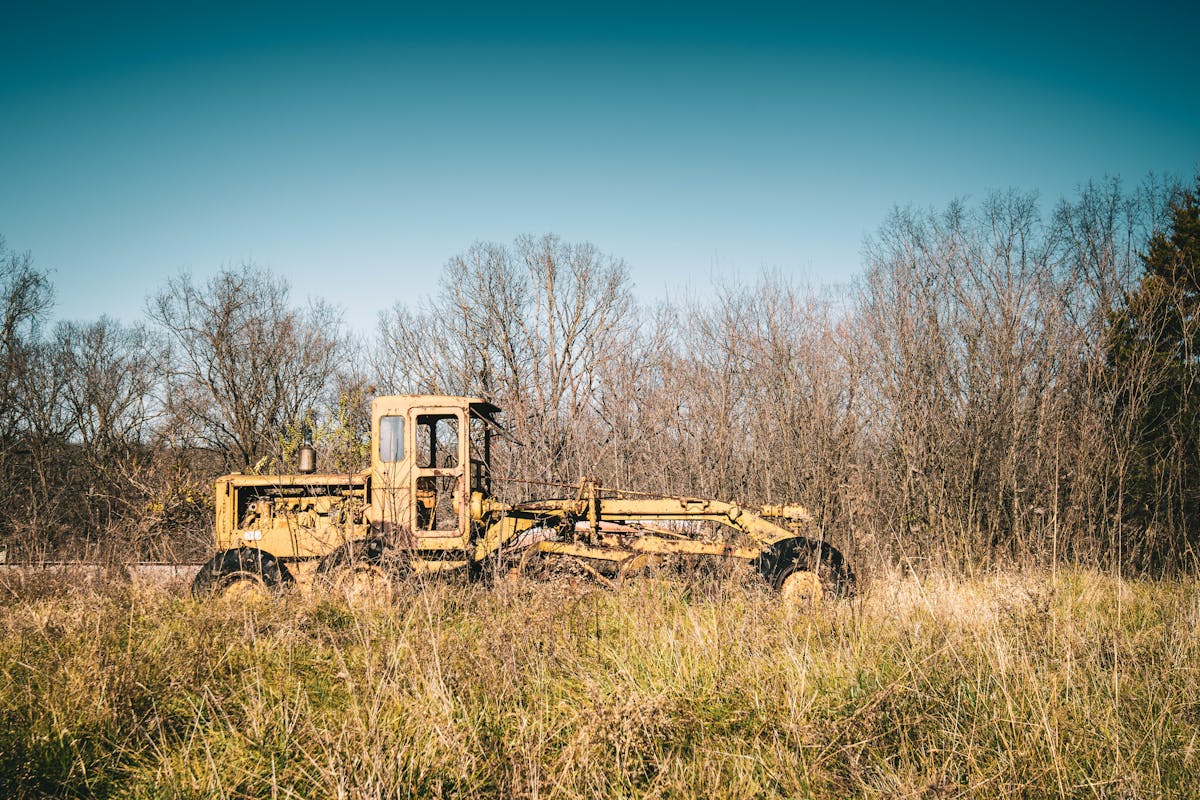
If you own property in Ohio, you already know how fast brush takes over. One season of neglect and your back fence line disappears. Two seasons and that open field your kids used to play in looks like a wall of thorns. Five years and you are looking at a property that feels smaller than it actually is, because a third of it is now impenetrable brush.
Brush clearing is one of the most common land management tasks in Northeast Ohio, and it is also one of the most misunderstood. Property owners either underestimate the work involved, overpay for the wrong method, or try to DIY it and give up after a weekend of fighting multiflora rose and honeysuckle with a string trimmer. When the growth is dense, our land clearing service is usually the fastest way to reset the property.
This guide covers everything you need to know — what brush clearing actually involves, the different methods and their tradeoffs, realistic costs, and when it makes sense to call a professional versus handling it yourself.
What Counts as Brush?
Before we get into methods and costs, it helps to define what we are actually talking about. In the land clearing world, brush includes:
- Saplings and small trees under 6 inches in diameter
- Thorny invasive shrubs like multiflora rose, autumn olive, and buckthorn
- Dense vine growth including wild grape, poison ivy, and Virginia creeper
- Brambles like blackberry and raspberry thickets
- Tall weeds and herbaceous growth over waist height
- Dead standing brush and storm debris
Brush is different from timber. If your property has mature trees with trunks over 10 to 12 inches, that is a tree removal or logging job, not brush clearing. Most brush clearing equipment is designed for material up to about 8 inches in diameter, though heavy-duty forestry mulchers can handle larger material.
Why Ohio Properties Get Overgrown So Fast
Ohio's climate is almost perfectly designed to grow brush. We get 35 to 40 inches of rainfall per year, have a long growing season from April through October, and our soil in Northeast Ohio is fertile enough to support rapid growth. Add in the aggressive invasive species that have established themselves throughout the state, and you have a recipe for properties that disappear under vegetation in a remarkably short time.
The biggest culprits in Northeast Ohio are multiflora rose, autumn olive, honeysuckle, and buckthorn. These invasive species were originally planted for erosion control and wildlife habitat decades ago, and they have since spread everywhere. They grow fast, produce berries that birds spread to every corner of your property, and they are incredibly difficult to kill. A single multiflora rose bush can produce over 500,000 seeds per year.
This is why brush clearing is rarely a one-time project. Without follow-up management, cleared areas will start regrowing within a season. We will cover maintenance strategies later in this article.
Brush Clearing Methods Compared
There are three main approaches to brush clearing, and each has its place. The right choice depends on the size of the area, the density of the brush, your budget, and what you plan to do with the land afterward.
1. Manual Clearing (Chainsaw, Brush Cutter, Loppers)
Manual clearing is exactly what it sounds like — a person with hand tools cutting brush one piece at a time. This is the most labor-intensive method but requires the least expensive equipment.
- Best for: Small areas under a quarter acre, selective clearing around structures or landscaping, areas too tight for equipment
- Cost: $3,000 to $6,000 per acre (labor-intensive)
- Speed: Very slow — expect one to two days per quarter acre for moderate brush
- Pros: Precise control, can work around obstacles, no heavy equipment damage to ground
- Cons: Extremely labor-intensive, generates piles of debris that need hauling or chipping, impractical for anything over half an acre
2. Bush Hogging (Rotary Mower on a Tractor)
Bush hogging uses a heavy rotary mower pulled behind a tractor to cut brush at ground level. It is faster than manual clearing and works well for certain types of vegetation. For a deeper comparison, check out our guide on forestry mulching vs brush hogging.
- Best for: Open areas with light to moderate brush, fields with tall grass and small saplings under 2 to 3 inches, flat terrain with good access
- Cost: $500 to $1,200 per acre
- Speed: One to four acres per day depending on density
- Pros: Affordable for light vegetation, widely available, good for field maintenance
- Cons: Cannot handle thick brush or saplings over 3 inches, leaves stumps and root systems intact, does not work well on slopes or rough terrain, debris is left in rows rather than mulched
3. Forestry Mulching (Mulcher Head on a Compact Track Loader)
Forestry mulching is the most versatile and efficient method for medium to heavy brush clearing. A compact track loader or excavator carries a mulcher head — a high-speed drum with carbide teeth that grinds brush, saplings, and small trees into fine wood chips in a single pass. If you are new to the concept, our complete guide on forestry mulching explains how it works in detail, and our forestry mulching service page shows where it fits best.
- Best for: Dense brush and invasive species, areas with saplings up to 8 inches in diameter, slopes and rough terrain, properties where you want a clean finished look
- Cost: $1,500 to $3,500 per acre depending on density and terrain (heavy clearing with large saplings runs $2,500 or more per acre)
- Speed: One to three acres per day for moderate brush
- Pros: Clears and mulches in one pass, no debris to haul, mulch layer suppresses regrowth, works on slopes and uneven ground, leaves a clean usable surface
- Cons: Higher cost than bush hogging for light brush, requires specialized equipment and an experienced operator
How Much Does Brush Clearing Cost in Ohio?
Cost is always the first question, and the honest answer is: it depends. But here are realistic ranges based on what we see in Northeast Ohio:
- Light brush (tall grass, thin saplings, scattered shrubs): $500 to $1,500 per acre
- Moderate brush (dense shrubs, saplings to 4 inches, invasive thickets): $1,500 to $2,500 per acre
- Heavy brush (thick invasive stands, saplings to 8 inches, thorny brambles): $2,500 to $4,000 per acre
- Minimum charge: Most operators have a minimum of $1,200 to $1,600 per visit regardless of acreage
What Drives the Price Up
- Density — thick multiflora rose and autumn olive take three to four times longer to mulch than open saplings
- Terrain — hillsides, wet ground, and rocky soil slow production and increase wear on equipment
- Access — if equipment cannot drive directly to the work area, mobilization takes longer
- Debris — properties with old fencing, concrete, or buried junk require extra care to avoid equipment damage
- Size — smaller jobs cost more per acre because mobilization is a fixed cost spread over less work
For a detailed breakdown including other land clearing services, see our full Ohio land clearing cost guide.
Common Brush Clearing Scenarios
Most brush clearing jobs fall into a few common categories. Here is what each typically involves:
Overgrown Fence Lines and Property Boundaries
This is probably the single most common brush clearing request we get. Fence lines are brush magnets — birds sit on fences and deposit seeds, and the vegetation grows undisturbed because nobody mows right up to the fence. After a few years you cannot even see the fence anymore. Clearing fence lines typically runs $8 to $15 per linear foot depending on the width and density of the growth.
Overgrown Lots and Unused Acreage
Maybe you bought a property with five acres and only maintain two. Maybe you inherited land that has not been touched in a decade. Maybe you just stopped mowing the back portion a few years ago and now it is a jungle. These jobs are straightforward — clear the vegetation, mulch it in place, and restore the usable area. Our guide on reclaiming overgrown lots covers this scenario in depth.
Preparation for Construction or Fencing
If you are building a structure, installing a fence, putting in a driveway, or developing a portion of your property, brush clearing is step one. You cannot survey, grade, or build on land you cannot walk through. Construction prep clearing often needs to go down to bare dirt, which means forestry mulching followed by grubbing out root balls and stumps.
Fire and Safety Hazard Reduction
Dense brush near structures is a fire risk, even in Ohio where we do not think about wildfire the way western states do. Dead brush and accumulated debris can ignite from a stray spark, a lightning strike, or a neighbor burning leaves. Clearing a defensible space around structures is common sense property management.
Property Value and Curb Appeal
Overgrown property looks abandoned and directly impacts property value. If you are thinking about selling, or if you just want your place to look maintained, clearing visible brush is one of the highest-ROI improvements you can make. A property that looks like it has five usable acres is worth more than one where three acres are buried in honeysuckle.
DIY Brush Clearing: When It Makes Sense
Not every brush clearing job needs a professional. Here is when DIY makes sense and when it does not:
DIY Is Reasonable When
- The area is under a quarter acre
- Brush is mostly grass, weeds, and thin saplings under 2 inches
- You have access to a brush cutter, chainsaw, and a way to dispose of debris
- The terrain is flat and accessible
- You have the time — budget a full weekend for a quarter acre of moderate brush
Hire a Pro When
- The area is over half an acre — the labor math stops making sense for DIY above this threshold
- Dense thorny invasives are present — multiflora rose and blackberry brambles will eat you alive with hand tools
- Saplings are over 3 inches in diameter — a chainsaw works but is painfully slow for clearing dozens of them
- The terrain is steep, rocky, or wet — safety risk goes up and production goes way down
- You need a clean finished result — hand clearing leaves piles that need chipping and hauling, while mulching leaves a finished surface
A common middle ground is to DIY the easy sections and hire a pro for the dense stuff. There is no rule that says you have to clear the whole property one way.
What Happens After Brush Clearing
Clearing the brush is only half the battle. If you do not manage the area afterward, the brush comes back. Here is what to expect:
Regrowth Timeline
Invasive species like multiflora rose and autumn olive will start resprouting from root systems within weeks of clearing. Native brush and saplings regrow more slowly but will still reclaim the area within two to three years without management. The mulch layer from forestry mulching helps suppress regrowth by blocking light, but it is not a permanent solution.
Follow-Up Options
- Regular mowing — if the cleared area is flat, mowing every two to four weeks during the growing season prevents brush from re-establishing
- Herbicide treatment — targeted application on cut stumps and resprouts is the most effective way to kill invasive root systems permanently
- Seeding — planting grass or a cover crop mix after clearing establishes competition that slows brush regrowth
- Second-pass mulching — a follow-up mulching pass 12 to 18 months after the initial clearing catches regrowth before it gets established
Why We Use Forestry Mulching for Most Brush Clearing
At Apex Land Services, forestry mulching is our primary method for brush clearing across Northeast Ohio. Here is why:
It is a single-pass operation. The mulcher head cuts the vegetation and grinds it into chips simultaneously. There are no piles to move, no brush to burn, no loads to haul to a dump site. The chips stay on the ground as a natural mulch layer that suppresses weeds and prevents erosion.
It handles everything in one machine. Light grass, dense honeysuckle thickets, six-inch saplings, and everything in between — the mulcher processes all of it. We do not need to bring a chainsaw crew, a chipper, a brush hog, and a dump truck. One machine does the work of four.
It works on terrain that other methods cannot. Our compact track loader goes where tractors and bush hogs cannot — slopes, uneven ground, between structures, and through tight access points. Tracks distribute weight to minimize ground disturbance, even on soft or wet soil.
The result looks finished. When we leave a property, it looks maintained — not like a disaster area with piles of brush waiting to be dealt with. The ground is covered in a uniform layer of wood chips that blends naturally with the landscape.
Ready to Clear Your Property?
Whether it is a quarter acre fence line or twenty acres of overgrown brush, we can help. Get a free estimate in under a minute through our instant estimate tool — no phone calls, no waiting around for someone to show up and give you a number.
Get your free instant estimate or call us directly at (440) 839-8379.