
Both clear land, but they're fundamentally different. Brush hogging mows. Forestry mulching destroys. If you pick the wrong one, you'll waste money and the problem comes back.
What Is Brush Hogging?
Brush hogging is essentially a rotary mower pulled behind a tractor. It cuts grass, weeds, and light brush up to about 2 inches in diameter. Think of it as a heavy-duty lawn mower designed for rough terrain rather than manicured lawns.
Brush hogging excels at maintaining hay fields, mowing pastures, keeping fence lines trimmed, and providing seasonal field maintenance. It's perfect for areas that are already relatively clear but need regular cutting to prevent vegetation from taking over.
However, brush hogging does NOT remove stumps, saplings, or anything with real root structure. It cuts what's above ground and leaves the root systems intact. This means the vegetation grows back within weeks, making brush hogging a maintenance tool rather than a permanent solution.
What Is Forestry Mulching?
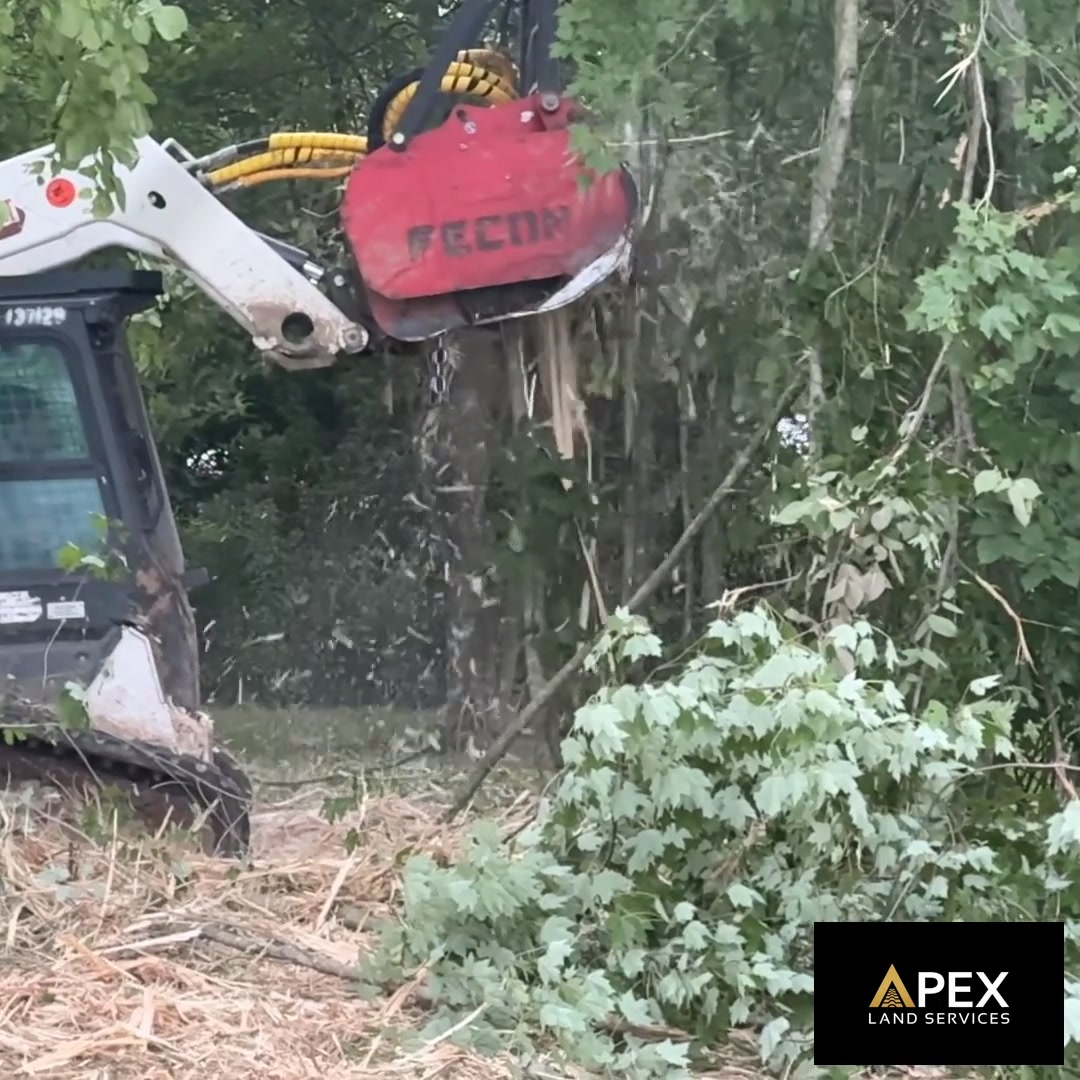
Forestry mulching uses a compact track loader equipped with a high-powered mulching head that grinds trees up to 6-8 inches in diameter, stumps, brush, and undergrowth into mulch in a single pass. The mulch stays on the ground as erosion control and weed suppression.
This method handles saplings, invasive species like honeysuckle and multiflora rose, overgrown lots, wooded understory, and fence lines with established trees. The key difference: forestry mulching is a one-and-done solution where vegetation doesn't just grow back because the mulch layer suppresses regrowth.
Side-by-Side Comparison
| Feature | Brush Hogging | Forestry Mulching |
|---|---|---|
| What it cuts | Grass, weeds, light brush (≤2") | Trees (≤8"), stumps, dense brush, saplings |
| Equipment | Tractor + rotary mower | Compact track loader + mulching head |
| Cost | $50-150/acre | $1,500-3,500/acre |
| Regrowth | Yes — grows back in weeks | Minimal — mulch suppresses regrowth |
| Stumps | Leaves them | Grinds them |
| Ground disturbance | Minimal | Minimal (tracks float on surface) |
| Best for | Field maintenance | Land transformation |
| One-time fix? | No — needs repeating | Yes — lasting results |
When to Choose Brush Hogging
Brush hogging is the right choice when:
- You're maintaining an already-clear field
- Grass and weeds are under 3 feet tall
- There are no trees or woody stems to deal with
- You need annual maintenance on farmland
- You have a tractor and brush hog (or can hire a local farmer)
When to Choose Forestry Mulching
Forestry mulching is the better option when:
- Your property hasn't been maintained in years
- Saplings and brush have taken over
- You need stumps gone (not just cut)
- Invasive species are spreading across your land
- You're prepping land for building, fencing, or farming
- You want a permanent solution — not seasonal mowing
Can You Use Both?
Yes. Many property owners use forestry mulching to do the heavy initial clearing, then switch to brush hogging for annual maintenance. Clear it once with a mulcher, keep it clear with a brush hog. That's the most cost-effective long-term approach.
The Bottom Line
Brush hogging maintains. Forestry mulching transforms. If your land has trees, stumps, or hasn't been touched in years, brush hogging won't cut it (literally). You need the power of a forestry mulcher to get the job done right the first time.
Get a Free Assessment
Not sure which service your property needs? We'll come look at it and tell you — no charge, no obligation. If brush hogging is actually the right call, we'll say so. Call (440) 839-8379 or get an instant estimate at apxlandservices.com/instant-estimate.