
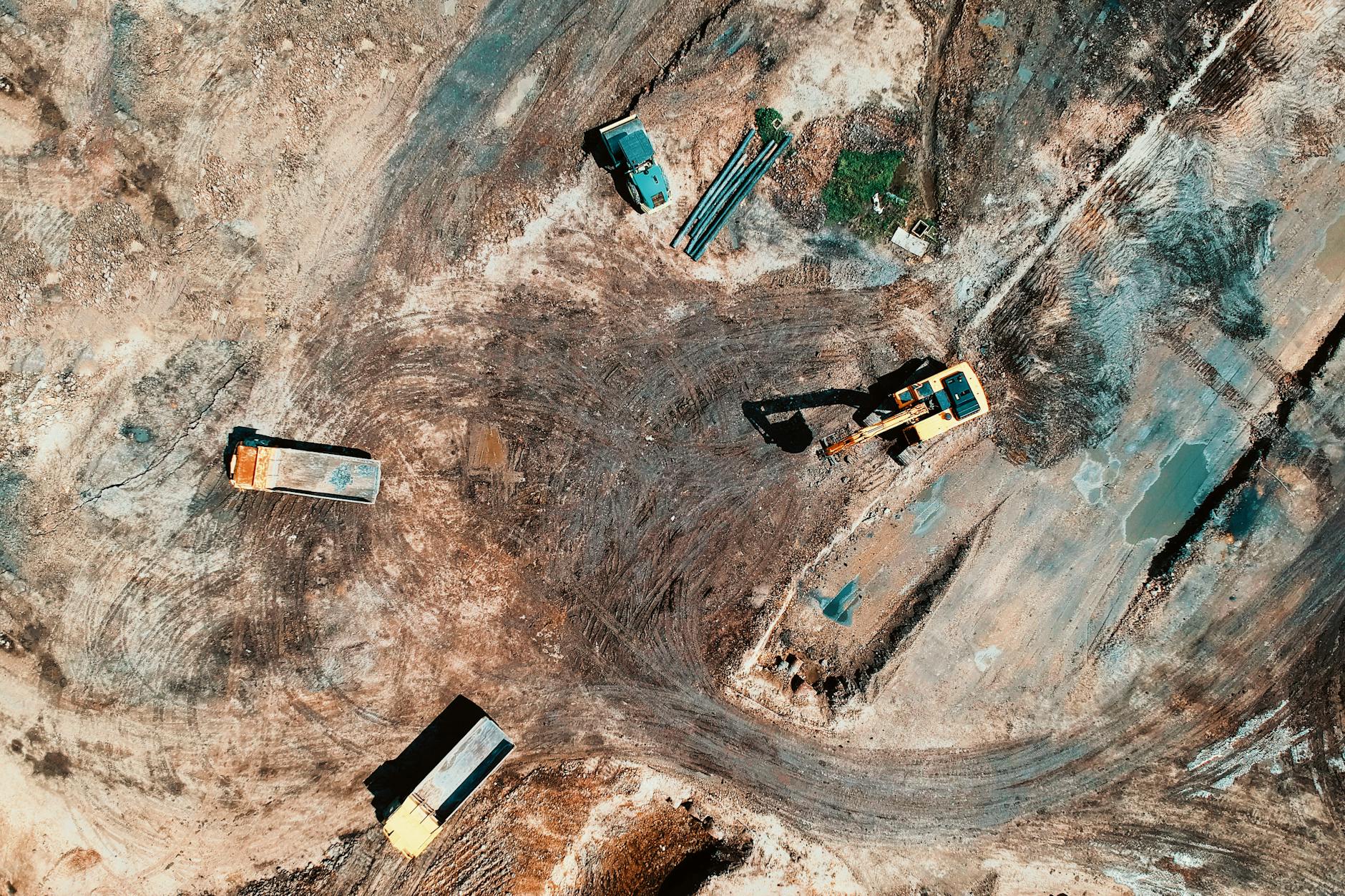
Ohio's construction season is officially underway — and it's a big one. The Ohio Department of Transportation (ODOT) just kicked off a $328 million-plus construction program focused on the Cleveland metro area, a signal that the region's building activity is ramping up in a meaningful way. For property owners in the Cleveland-Akron corridor who've been waiting to break ground on a new home, pole barn, workshop, or commercial structure, the message is clear: the time to prepare is now.
But here's the thing — construction doesn't start with a foundation pour or a framing crew. It starts with the land. Before any builder, excavator, or concrete contractor can step foot on your property, the ground beneath you needs to be cleared, prepped, and ready. And in Northeast Ohio, where freeze/thaw cycles, heavy clay soils, and a short spring window all conspire to complicate the process, getting your land prep done early is the single most important thing you can do to stay on schedule.
This guide walks through every step of preparing your land for spring construction in Ohio — from initial clearing through grading and drainage — with specific attention to the challenges and opportunities unique to the Cleveland-Akron market.
Why Spring Is the Ideal Window for Land Clearing Before Construction
Spring represents a narrow but powerful opportunity for land clearing and site preparation in Northeast Ohio. Here's why the timing matters so much for land clearing for construction Ohio projects:
First, the ground is firm but thawed. In early spring — late February through mid-April in most of Northeast Ohio — the soil has released its deep freeze but hasn't yet been saturated by spring rains. This gives heavy equipment stable footing without the ruts and compaction problems that come with working in wet conditions.
Second, deciduous vegetation is still dormant. Trees and shrubs that haven't leafed out are dramatically easier to see, assess, and clear. Sight lines are better, and forestry equipment moves through the area more efficiently without full canopy and undergrowth fighting back.
Third, you get ahead of the construction queue. Contractors — clearing crews, graders, excavators — fill up fast once spring construction season opens. Getting your land cleared in March or April means you're at the front of the line, not the back.
The alternative — waiting until late spring or summer to address land prep — compounds every problem. Wet soil, dense growth, a booked-up contractor market, and delayed project timelines all stack up. For a spring construction prep Ohio project, every week of delay in March can cost you a month on your build schedule.
Understanding Ohio's Freeze/Thaw Cycle and What It Does to Your Land
If you've spent a winter in Ohio, you know the freeze/thaw cycle intimately — that alternating rhythm of hard freezes and mild spells that defines January, February, and early March in the Great Lakes region. What you may not know is what it does underground, and why it matters so much for building lot clearing northeast Ohio projects.
Every freeze/thaw cycle causes soil to expand and contract. Over a full Ohio winter, this process:
- Heaves and shifts root systems, making stump removal easier but also creating new ground-level hazards
- Saturates the upper soil layers as ice melts, increasing the risk of equipment getting stuck
- Can shift graded surfaces, requiring re-grading after significant freeze events
- Exposes areas of poor drainage that may not be obvious in summer conditions
The practical takeaway: a property that looks perfectly solid in October may be soft, heaved, and challenging in March. Experienced land clearing contractors in Northeast Ohio account for this — they know which soil types hold up and which ones turn to mush, and they schedule accordingly.
The Clay Soil Challenge: Northeast Ohio's Underground Obstacle
Clay soil is Northeast Ohio's defining characteristic and its biggest construction challenge. Much of the land across Cuyahoga, Summit, Lorain, Medina, and surrounding counties sits on deep clay deposits left behind by glacial activity thousands of years ago.
Clay soil creates several problems for construction site prep:
- Poor drainage — Water doesn't percolate through clay efficiently, creating standing water and soggy conditions long after rain events
- High plasticity when wet — Clay becomes nearly impossible to work with when saturated; equipment sinks, and grading becomes imprecise
- Shrink-swell behavior — Clay expands when wet and contracts when dry, which can shift foundations and structures over time if not properly addressed
- Compaction issues — Clay compacts easily under equipment pressure, which can be beneficial when compacted properly but destructive when traffic occurs over wet, uncompacted areas
Proper drainage planning is not optional on Ohio clay sites — it's foundational to everything that comes after. This is why spring site prep Ohio projects that skip or rush the drainage step often create expensive problems for builders and property owners down the road.
Step 1: Land Clearing — Removing Everything That Shouldn't Be There
The first step in preparing any Ohio property for construction is getting the land cleared. For a building lot clearing northeast Ohio project, this means removing all vegetation — trees, brush, shrubs, invasive species, and ground cover — from the footprint of the structure and the surrounding work zone.
What needs to go depends on what you're building. A house typically requires clearing the entire building footprint plus a working perimeter of 20–30 feet in all directions. A pole barn or outbuilding needs similar clearance. A driveway or access road needs a corridor wide enough for construction equipment and then some.
Common vegetation on Northeast Ohio building lots includes:
- Mixed hardwoods — Oak, maple, ash, cherry, walnut in various sizes
- Invasive species — Autumn olive, bush honeysuckle, multiflora rose, tree of heaven
- Undergrowth — Wild grape, briars, blackberries, native shrubs
- Field vegetation — Old field succession species on former agricultural land
Every tree, shrub, and invasive plant on your building site is an obstacle to construction. Getting them cleared efficiently and completely — without leaving behind buried debris, root systems, or soil disturbance that undermines the build — is the job of experienced land clearing for construction Ohio professionals.
Why Forestry Mulching Is the Most Efficient Clearing Method for Construction Sites
There's a reason that experienced developers, general contractors, and custom home builders increasingly specify forestry mulching as their preferred clearing method: it's simply the fastest, most efficient, and most cost-effective approach for most Ohio building sites.
Traditional clearing methods — chainsaw crews, bulldozers, cut-pile-burn or cut-pile-haul — involve multiple steps, multiple pieces of equipment, and significant property disruption. A traditional clearing operation on a wooded lot might require a crew of four, three or four pieces of heavy equipment, and a week of work. Debris piles need burning (requiring permits) or hauling (requiring dump trucks and tipping fees). Topsoil gets scraped, graded off-site, and the finished product looks like a war zone.
Forestry mulching does the same job in one pass with one machine and one operator. The mulching head — a high-speed drum fitted with hardened carbide teeth — processes trees up to 8 inches in diameter, brush, shrubs, invasive species, and ground cover simultaneously, shredding everything into fine wood chips that are spread back on the ground as natural mulch.
For spring construction prep Ohio projects, the advantages are concrete:
- Speed — An acre of medium brush clears in 4–8 hours; a typical building lot in a single day
- No burning — No burn permits, no smoke, no neighbor complaints, no weather dependency
- No hauling — No dump trucks, no tipping fees, no scheduling around debris removal
- Minimal ground disturbance — Tracks distribute weight, topsoil stays in place
- Mulch layer protects the soil — Prevents erosion between clearing and construction start
- Selective capability — Skilled operators can preserve specimen trees and landscape features
For most residential and light commercial land clearing for construction Ohio projects, forestry mulching saves 20–40% compared to traditional clearing methods while delivering a cleaner, more construction-ready result. Learn more about our forestry mulching service and what it can do for your site.
Step 2: Stump Removal — Getting the Roots Out
Once the surface vegetation is cleared, stumps and root systems become the next critical item on the construction prep checklist. This is a step that inexperienced property owners sometimes try to skip — and they almost always regret it.
Root systems left in the ground beneath a building site create serious problems:
- Decomposing roots leave voids — As roots break down underground, they leave cavities that can cause soil settlement and uneven support for foundations and slabs
- Regrowth from living stumps — Many Ohio hardwood species, particularly oak and maple, will regrow aggressively from root systems if the stump isn't properly addressed
- Interference with utilities — Root systems can impede underground utility installation — electric, water, septic, and drainage lines
- Foundation movement — Large root systems beneath or adjacent to foundations can push, shift, and crack concrete as they decompose or during drought-induced contraction
For construction sites, complete stump removal — extracting the full root ball below grade — is usually the right choice over surface grinding alone. While stump grinding is appropriate for landscaping and yard maintenance applications, construction sites need a genuinely clean subsurface.
Our stump grinding and removal service handles both approaches: surface grinding for areas where construction won't occur, and full below-grade extraction for building footprints, driveways, and utility corridors.
Step 3: Grading — Setting Up Your Site for Success
With clearing and stump removal complete, grading transforms raw land into a construction-ready site. Proper grading accomplishes several things simultaneously:
It establishes a level pad for the building foundation. On sloped or rolling terrain — common across the Cleveland-Akron metro's hillier areas — this means cut-and-fill work to create a stable, level building area.
It sets up drainage grades. Proper site grading channels water away from the building footprint, toward swales, detention areas, or natural drainage courses. Getting this right from the start prevents the standing water and foundation moisture problems that plague poorly prepared Ohio sites.
It creates construction access. Equipment needs to get in, position itself, and move around. A graded site makes this predictable and efficient.
Our complete site preparation service covers clearing through rough grading, giving builders a truly construction-ready surface without the need to coordinate multiple contractors.
Step 4: Drainage Considerations for Ohio Clay Soil
Drainage planning deserves its own step in any Ohio construction prep project. On clay-heavy sites across the Cleveland-Akron region, water management isn't an afterthought — it's foundational to the entire build.
Key drainage considerations for Northeast Ohio building sites include:
Positive drainage away from the structure — A minimum 2% grade (1/4 inch per foot) away from the foundation for a distance of at least 6 feet is standard practice in Ohio. On clay sites, steeper grades and longer distances are often warranted.
Swales and diversions — Natural drainage channels and constructed swales direct water around and away from building areas. Identifying existing drainage patterns before clearing helps preserve natural water management systems.
French drains and perimeter drainage — On sites with high water tables or poor natural drainage, perforated pipe systems installed during site prep intercept groundwater before it reaches the foundation.
Retention and detention — Some municipalities and counties in Northeast Ohio require on-site stormwater management for new construction. Check with your local planning or zoning office before finalizing your site plan.
Ohio Permit Requirements to Know Before You Start
Ohio's permitting landscape for land clearing and site preparation is relatively favorable compared to many states — but there are important requirements to understand before a single tree comes down on your building site.
Burn permits — Ohio allows open burning of debris from land clearing activities, but local fire districts regulate this differently. Many Northeast Ohio communities prohibit open burning within municipal limits, and burn permits are required in townships even where burning is allowed. Forestry mulching eliminates this issue entirely.
Wetland and waterway permits — If your property contains or borders wetlands, streams, or regulated water bodies, Ohio EPA Section 401 Water Quality Certification and potentially US Army Corps of Engineers Section 404 permits may be required before clearing. Violating these requirements carries significant penalties. Always identify wetland boundaries before clearing near any water feature.
Floodplain regulations — Properties in FEMA-designated floodplains are subject to local floodplain management ordinances that may restrict grading and filling activities.
Tree preservation ordinances — Some Northeast Ohio municipalities have adopted tree preservation ordinances that restrict removal of trees above certain caliper sizes on private property. Check with your local zoning office, particularly in Cuyahoga County communities.
Building permits — While land clearing typically doesn't require a building permit, the site prep work that follows (grading, erosion and sediment control) often falls under the scope of your building permit and will be inspected by local authorities.
Erosion and sediment control — Ohio's NPDES permits govern stormwater from construction sites over one acre. If your project disturbs more than one acre, you'll need a Storm Water Pollution Prevention Plan (SWPPP) before construction begins.
The Cleveland-Akron Market: Right Place, Right Time
ODOT's $328 million-plus Cleveland construction season isn't just about roads and bridges — it's a bellwether for the region's broader building momentum. When Ohio's largest metropolitan area is investing at that scale in its infrastructure, the ripple effects touch every category of construction: residential, commercial, industrial, and agricultural.
The Cleveland-Akron metro is Apex Land Services' primary market, and we see the demand firsthand. Property owners across Cuyahoga, Summit, Lorain, and Medina counties are preparing building sites for new construction at a pace we haven't seen in years. Custom homes on wooded lots. Pole barns and agricultural outbuildings on rural acreage. Commercial parcels being prepped for development along the region's major corridors.
What this means practically: clearing and site prep contractors are in high demand. Schedules fill up fast. The property owners who move first get the best availability and avoid the frustrating delays of waiting for a contractor who's already booked into June.
If you're in the Cleveland-Akron region and have a construction project on the horizon for 2026, now is the time to get your land prep scheduled — not in May, not in April, now.
What a Complete Spring Construction Prep Timeline Looks Like
For a typical residential build in Northeast Ohio — a custom home on a 2–5 acre lot, for example — here's a realistic spring construction prep timeline:
- Late February / Early March — Site assessment, estimate, permit review. Schedule clearing crew
- March — Land clearing and forestry mulching. Stump removal from building footprint and driveway corridor
- Late March / Early April — Rough grading. Drainage installation. Erosion control measures installed
- April — Site ready for excavation contractor. Permit applications active or approved
- May and beyond — Foundation work, utility rough-ins, construction begins
This sequence works because each step builds on the previous one. Clearing can't happen until the site is assessed. Grading can't happen until clearing is complete. Construction can't happen until grading and drainage are properly established. Getting the sequence started in February or March — rather than April or May — is what keeps a spring/summer build on track.
Ready to Prep Your Land for Spring Construction? Let's Talk.
Apex Land Services handles the full scope of spring construction prep Ohio property owners need — from initial clearing through rough grading — with professional equipment and an experienced crew that knows Northeast Ohio's soils, seasons, and site challenges.
We serve the entire Cleveland-Akron metro and surrounding counties: Cuyahoga, Summit, Lorain, Medina, Erie, Huron, Wayne, Ashland, Richland, Crawford, Ottawa, and Seneca.
📞 Call us for a free estimate: (440) 839-8379
🌐 Get an instant estimate online: apxlandservices.com/instant-estimate
Spring schedules fill up fast. The best time to call is today.