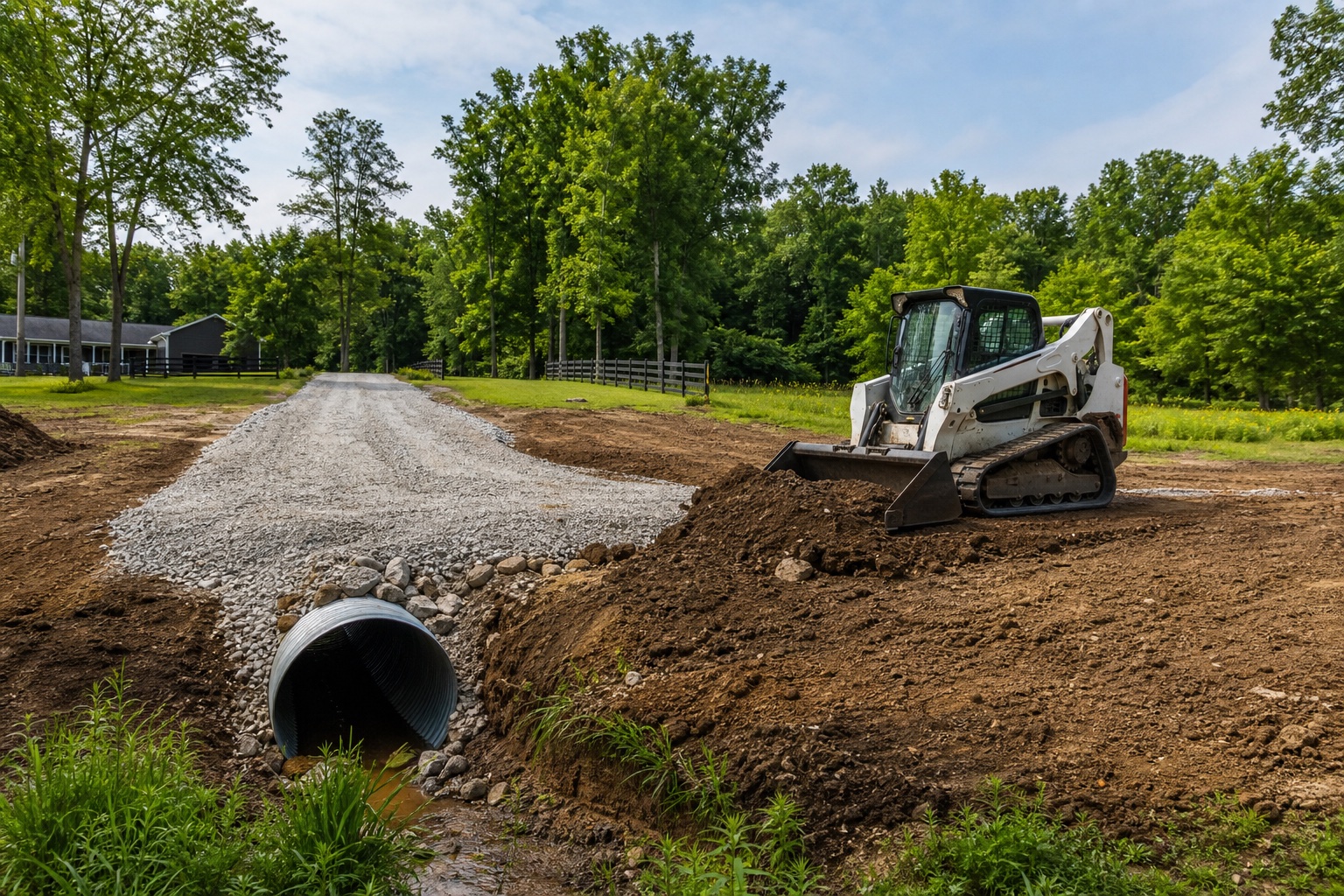
Excavation work in Huron, Lorain, Ashland, and Erie counties is rarely just moving dirt. On rural and semi-rural properties, the real job is usually making the land usable: getting trucks in, getting water out, preparing a building site, fixing a driveway, opening a ditch crossing, or shaping ground so the next phase of the project can happen.
That is why the best excavation plan starts before the machine shows up. A good contractor looks at access, grade, drainage, soil, stumps, trees, overhead room, spoils, and how the property will be used after the work is complete. Apex Land Services handles excavation services, clearing, drainage, and site prep from our Wakeman base, right between the Huron and Lorain county markets.
Why This Four-County Area Needs a Practical Excavation Approach
Huron, Lorain, Ashland, and Erie counties share a lot of the same project types, but the sites can look very different. Huron and southern Lorain have farm lanes, wooded parcels, old fence rows, and rural building sites. Erie County adds lake-influenced drainage and flat ground near the shoreline. Ashland County brings more slope, wooded ravines, and hillside access problems.
That mix matters. A driveway approach in flat clay ground is a different problem than a building pad on a wooded Ashland County slope. A culvert crossing near a farm ditch is not the same as reshaping runoff around a lake-area property. Good excavation work adapts to the site instead of forcing every job into the same method.
Common Excavation Projects in Our Top Counties
| Project type | Where it shows up | What to plan for |
|---|---|---|
| Driveway access and farm lanes | Huron, Lorain, Erie, Ashland | Clearing, ditch crossings, stone base, drainage, and truck turning room |
| Culvert installation | Rural driveways, field access, drainage ditches | Pipe size, ditch flow, cover depth, headwalls, and approach grade |
| Building site prep | Pole barns, garages, shops, homes, outbuildings | Clearing, stump work, pad layout, drainage, rough grading, and access |
| Site grading and drainage | Wet yards, soft pads, low driveways, runoff problems | Water source, discharge path, slope, soil, and future maintenance |
| Pond digging and expansion | Rural acreage, farms, recreational land | Spoil placement, access, water conditions, depth, and surrounding grade |
| Utility trenching | Water lines, conduit, drainage pipe, property improvements | Route, depth, obstacles, backfill, and restoration |
Start With Access Before You Start Digging
Access is one of the biggest excavation cost drivers. If equipment, stone trucks, concrete trucks, delivery trailers, or service vehicles cannot reach the work area safely, the job slows down before it really starts. Sometimes the first excavation project is not the final project. It is the driveway, lane, or cleared route that lets the rest of the project happen.
For wooded or overgrown properties, access often overlaps with land clearing, forestry mulching, and driveway and access clearing. Opening the route first makes the site easier to measure, easier to drain, and easier to quote honestly.
Drainage Is the Part You Cannot Ignore
A driveway, pad, trench, or pond excavation can look finished on a dry day and still fail after the first hard rain. Northeast Ohio properties often deal with clay soils, flat grades, old farm ditches, saturated low spots, and runoff that follows the easiest path instead of the intended path.
Before excavation starts, ask where water comes from, where it sits, and where it can safely leave. That may point toward culvert installation, French drains, site grading and drainage correction, or a simpler grading change. The cheapest dirt work is not cheap if water immediately undoes it.
County-Specific Excavation Notes
Huron County
Huron County is home territory from Wakeman. Common projects include farm lane repair, rural driveway access, culverts, pole barn site prep, pond work, drainage correction, and clearing before construction. The advantage here is proximity: shorter mobilization, easier site visits, and a crew already familiar with the rural property mix around Norwalk, New London, Greenwich, Monroeville, and Willard.
For Huron County projects, see Huron County excavation services, Huron County culvert installation, and Huron County land clearing.
Lorain County
Lorain County ranges from suburban growth near Elyria, Avon, Amherst, and North Ridgeville to rural parcels around Wellington, Oberlin, Grafton, Kipton, and Rochester. That means excavation work may involve building access on wooded lots, repairing old farm drives, adding ditch crossings, cleaning up drainage, or prepping ground for outbuildings and rural improvements.
For Lorain County projects, see Lorain County excavation services, Lorain County driveway and access clearing, and Lorain County culvert installation.
Ashland County
Ashland County adds more slope and wooded terrain than the flatter counties closer to Lake Erie. Around Ashland, Loudonville, Perrysville, Hayesville, and the Mohican corridor, excavation planning often has to account for hillside access, drainage paths, tree cover, and erosion control. A rushed cut into sloped ground can create long-term maintenance problems.
For Ashland County projects, see Ashland County excavation services, Ashland County land clearing, and Ashland County forestry mulching.
Erie County
Erie County excavation often means managing water carefully. Sandusky, Huron, Vermilion, Milan, Berlin Heights, and the inland farm areas all have projects where grade, drainage, and access matter. Near lake-influenced properties, you want a contractor thinking about runoff and disturbed soil before the job is opened up.
For Erie County projects, see Erie County excavation services, Erie County culvert installation, and Erie County drainage services.
What Changes Excavation Cost
Excavation pricing is site-specific because two properties with the same project name can require completely different work. A 200-foot driveway across dry, open ground is not the same as a 200-foot driveway through brush, stumps, a ditch crossing, and wet clay.
- Access distance from the road to the work area
- Brush, trees, stumps, and obstacles that need cleared first
- Soil moisture, clay, rock, slope, and stability
- Whether spoils can stay on site or need shaped and moved
- Culverts, drainage pipe, stone, fabric, or other materials
- How finished the grade needs to be when the job is done
- Whether the project must support heavy trucks, buildings, concrete, or only light use
When Clearing and Excavation Should Be One Scope
A lot of projects are more efficient when clearing and excavation are planned together. If the building site is wooded, the driveway route is overgrown, or the ditch line is buried in brush, clearing first gives the excavation crew a better starting point. It also helps reveal soft spots, old stumps, hidden debris, and drainage problems before the estimate turns into guesswork.
This is where Apex fits well. We are not only looking at the dirt work. We can clear the route, mulch the brush, grind or remove stumps where needed, and then handle the practical excavation tasks that make the property usable.
Questions to Answer Before You Ask for an Excavation Quote
- What are you trying to build, access, drain, or improve?
- Where does equipment need to enter the property?
- Will trucks, trailers, concrete, stone, or building materials need to reach the site?
- Where does water go during and after a heavy rain?
- Are there stumps, trees, brush, fences, utilities, or old debris in the work area?
- Can excavated soil stay on site, and where should it be placed?
- How finished does the area need to look when the machine work is done?
The Best Excavation Contractor Is Usually the One Who Thinks Past the Dig
The machine work is only part of the project. The better question is whether the site works when the excavation is finished. Can water move away? Can trucks use the driveway? Is the pad accessible? Did the ditch crossing hold grade? Did the cleared area leave enough room for future maintenance?
That kind of thinking matters across Huron, Lorain, Ashland, and Erie counties because many projects are connected: clearing leads to access, access leads to excavation, excavation affects drainage, and drainage determines how the property holds up next season.
Get an Excavation Estimate in Huron, Lorain, Ashland, or Erie County
If you are planning driveway work, culverts, grading, drainage correction, pond digging, trenching, or building site prep, start with the property details. Apex Land Services can look at the access, drainage, clearing needs, and excavation scope together so the estimate reflects the actual site.
Call (440) 839-8379 or use the instant estimate form. Include the county, nearest town, what you want done, photos of the access route, and any known wet areas or ditch crossings.